Barefoot on the Trail: Engineering Outdoor Footwear That Keeps Ground Feel Without Sacrificing Grip
The barefoot category started in gyms, studios, and city sidewalks. Its next growth engine may be the trail. Outdoor users—hikers, trail runners, and long-distance walkers—are the most willing customers in footwear to pay for function, because they experience failure personally and immediately. A blister, a rolled ankle, or a slip on wet rock isn’t a review complaint; it’s a ruined trip. That’s exactly why outdoor is the highest-margin application for barefoot engineering, and why so few brands have gotten it right.
The Trail Paradox: Ground Feel vs. Protection vs. Grip
Trail design forces three requirements into conflict:
- Ground feel: The whole point of barefoot—proprioceptive feedback that lets the foot adapt to terrain in real time.
- Protection: Sharp rocks, roots, and debris punish a thin sole. Under-protected feet change their gait defensively, which defeats the purpose.
- Grip: Wet rock, loose gravel, and mud demand traction that conventional thin, flat outsoles simply don’t deliver.
Most brands pick two. The engineering challenge is delivering all three—and it’s solvable, but only with deliberate outsole design, not by adding thickness.
Lug Geometry: How to Get Traction on a Thin Sole
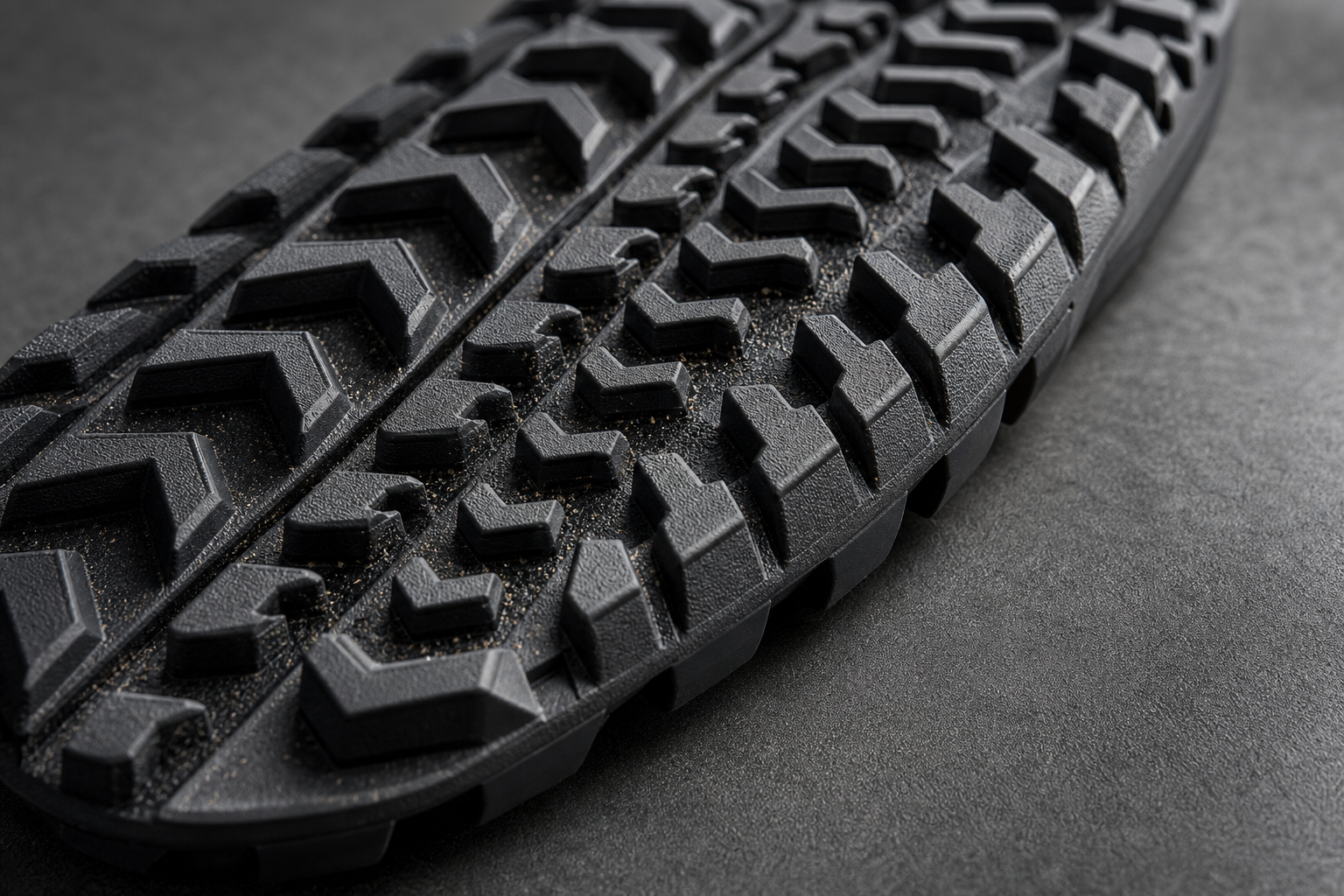
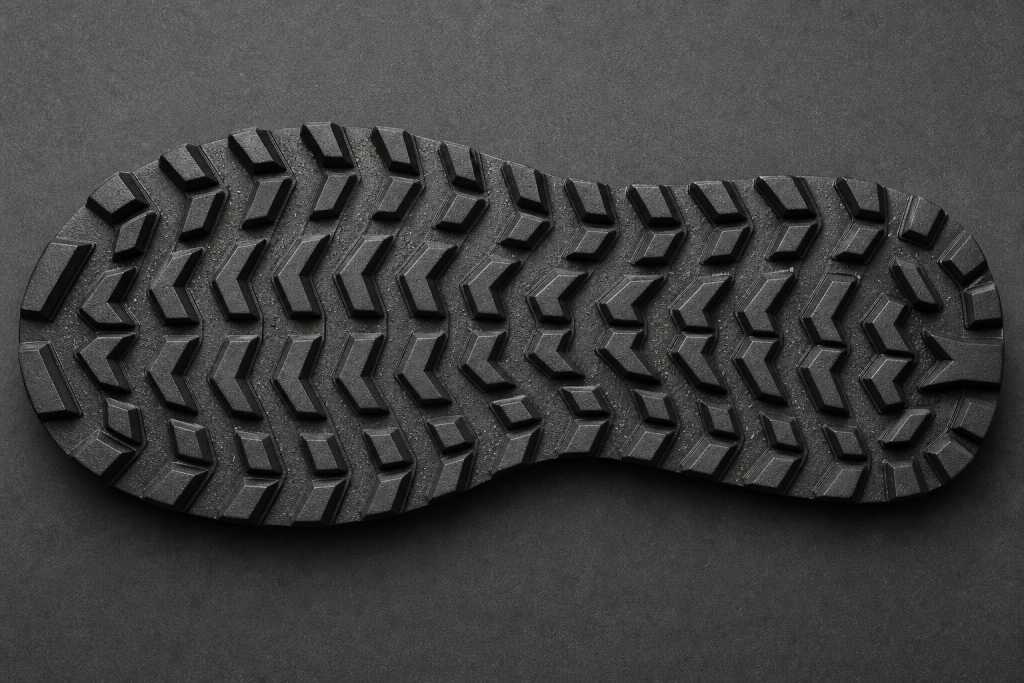
Traction is a geometry problem before it is a material problem. On a thin platform, the outsole must create mechanical engagement without adding stack height:
- Lug depth: 3-5mm is the practical band for barefoot trail. Enough to bite into loose surfaces; shallow enough to preserve ground transmission.
- Lug spacing: Wider spacing self-cleans in mud instead of packing. Tight, dense lugs clog and turn slippery.
- Multi-directional pattern: Chevron and angled lugs grip on both ascent and braking. Single-direction lugs fail on descents.
- Edge lugs: Wrapping lugs slightly onto the sidewall adds cornering grip on off-camber terrain—often the difference between confidence and a fall.
A flat, undifferentiated outsole is the single most common reason a barefoot trail shoe fails in customer hands. Fit and comfort may be perfect; without lug engineering, the product returns.
Compound Selection: Wet Grip vs. Abrasion Resistance
Rubber compounds trade one property against another. Soft compounds grip wet rock better but wear quickly; hard compounds last longer but slide. For trail use, the answer is usually a moderately soft base compound paired with a harder heel strike zone—plus verification data, not assumptions:
- Wet traction testing on representative surfaces (rock, tile, wood) rather than dry-lab numbers only.
- Abrasion testing (DIN 53516) to quantify wear rate against the compound choice.
- Cold-flex testing for winter use—compounds stiffen at low temperature and lose grip.
This is where documented test data separates a real development partner from an assembler. Ask for the numbers on the exact compound you’ll be buying.
Rock Protection Without Losing Ground Feel
The instinct is to add a rigid rock plate. The problem: a full-length rigid plate converts a barefoot shoe into a conventional shoe with a thin midsole—you keep the look, lose the function. Practical approaches:
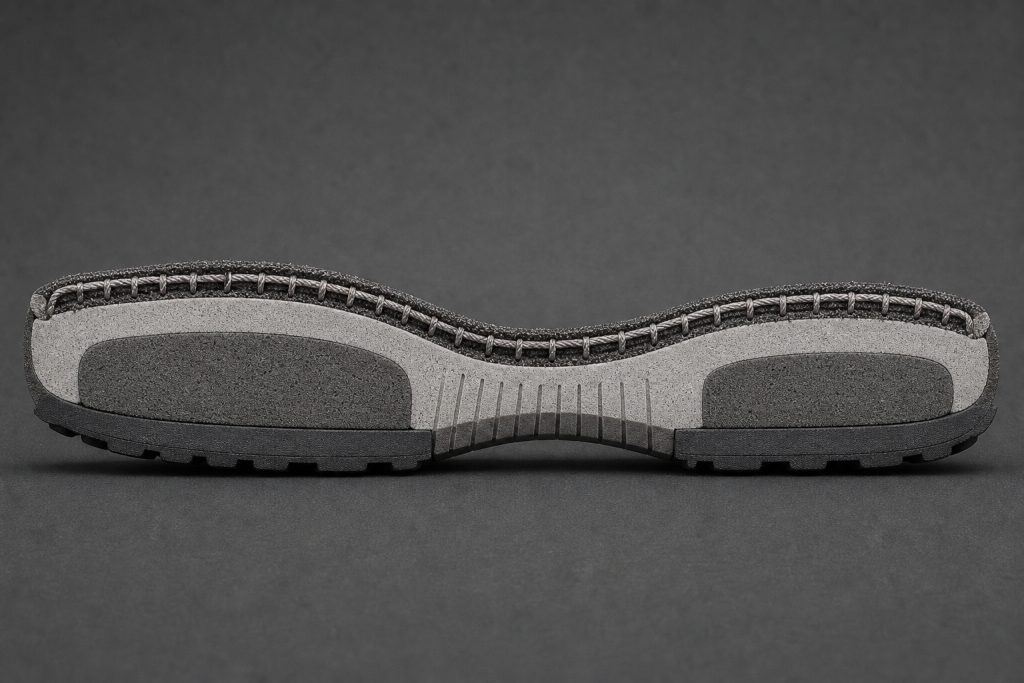
- Segmented plates: Divided protection zones that resist point pressure under the ball and heel while allowing the midfoot to flex.
- Forefoot-only protection: Hikers bear the most point pressure under the ball at push-off; protecting there preserves feel through the arch.
- High-density insert zones: Localized firmness molded into the midsole instead of a separate plate—lighter, and less likely to de-laminate.
- Explicit ground-feel acceptance: Define the specification, then test for it. If the plate removes sensitivity, it fails the requirement regardless of comfort scores.
Upper, Debris, and Water
Trail conditions punish uppers more than pavement does. Three practical requirements:
- Debris exclusion: Gusseted or snug-fitting collars keep grit out. Loose collars feel comfortable in the showroom and miserable at kilometer five.
- Drainage over waterproofing: For warm-weather trail use, rapid drainage and quick-dry materials beat a waterproof membrane, which can hold water in once it enters.
- Abrasion-resistant reinforcements: Toe caps and heel-counters take direct contact with rock. Unreinforced knit uppers wear through first.
Waterproof membranes still have a role—but for cold, wet, low-sweat use cases (winter walking, commuting), not for high-output trail running. Choose the mission, then the construction.
The Test Protocol That Earns Trail Credibility
Trail customers are skeptical, informed, and vocal. A credible development program documents:
- Wet and dry traction on multiple surface types.
- Abrasion wear rate (DIN 53516) on the production compound.
- Flex fatigue (Ross Flex) at the forefoot flex zone.
- Lug retention after wear cycles—do lugs round off and lose bite?
- Extended wear testing with real users on real terrain, with structured feedback.
Publishing even a summary of this protocol on your product page does more for conversion than any lifestyle photograph. Outdoor buyers read specifications.
Why This Matters for Your Brand
Outdoor barefoot is where premium pricing is most defensible: the customer can feel the difference, and the consequences of poor design are immediate and memorable. It also produces the strongest word-of-mouth in footwear—hikers and runners share gear decisions constantly.
The category is still open. Established outdoor brands have not committed to genuinely thin platforms, and barefoot brands have largely avoided technical terrain. The brand that engineers a credible trail barefoot shoe in the next season will define the reference point others are compared against.