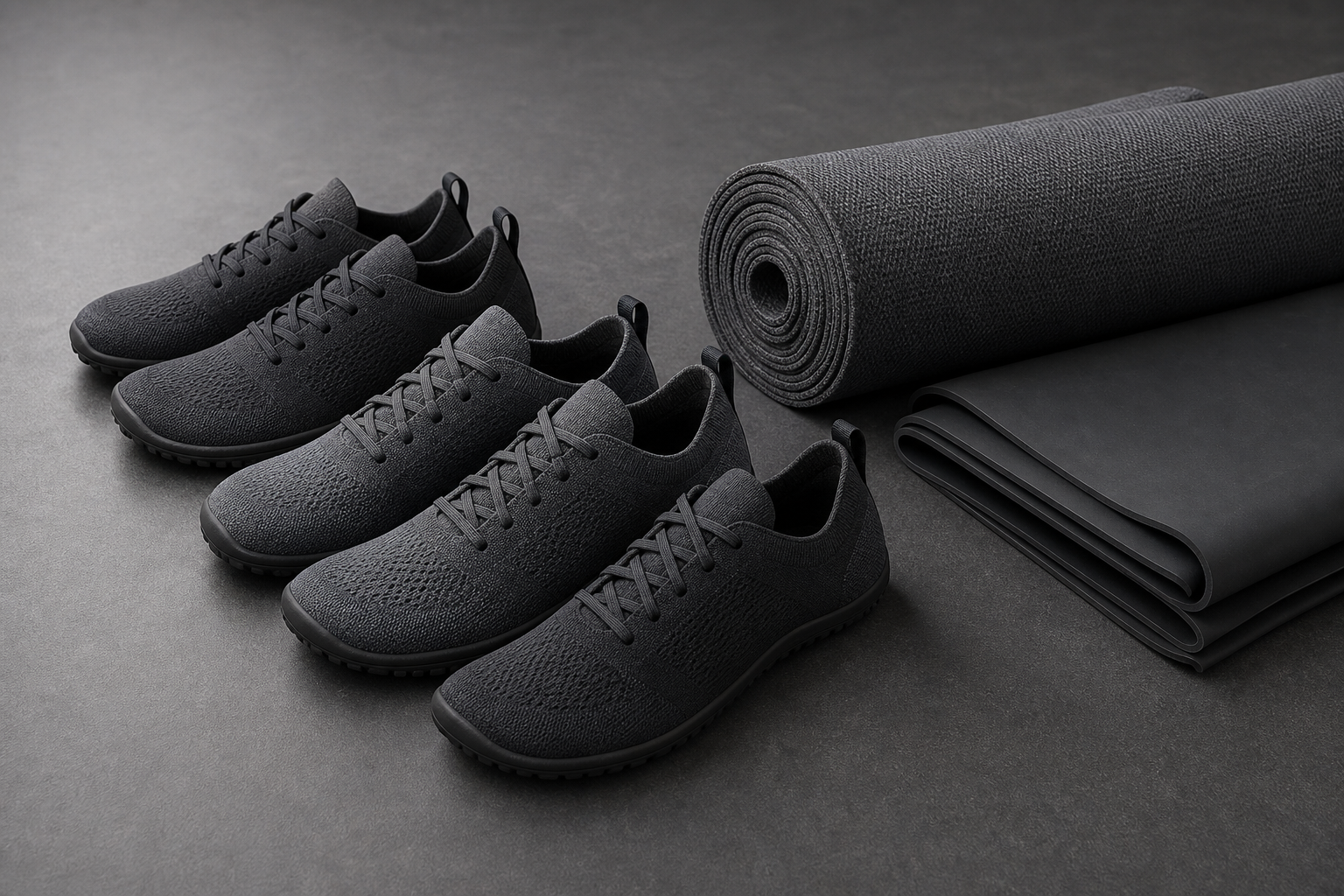
Standing All Day: The Occupational Case for Barefoot Work Footwear
There is a customer group the barefoot category keeps overlooking, and it happens to be one of the largest and most loyal in footwear: people who stand for a living. Nurses on twelve-hour shifts. Restaurant staff on hard tile. Warehouse pickers, retail floor teams, lab technicians, dental assistants, security staff. They buy shoes more often than anyone else, they buy them out of necessity rather than fashion, and the conventional options they are offered are quietly failing them.
Their needs are not the same as a gym-goer’s or a trail runner’s. Understanding why is the difference between selling them a shoe once and becoming the brand they reorder for a decade.
Why Conventional Work Shoes Fail This Group
The standard answer to long hours on your feet has been: add cushioning. That answer is incomplete, and in several ways it works against the wearer.
- Over-cushioning dulls proprioception. Very soft, thick midsoles feel good in the first hour and reduce stability over a shift. When the foot cannot sense the ground clearly, stabilising muscles work harder, and fatigue accumulates in the feet, shins and lower back.
- Narrow toe boxes compress feet that swell. Feet increase in volume through the day, especially under load and in warm environments. A tapered toe box that felt acceptable in the morning is squeezing the forefoot by hour eight — which is precisely when the pain starts.
- Heel elevation shifts the whole posture. A raised heel moves the centre of mass forward and asks the calf, knee and lumbar spine to compensate continuously. Across a long shift, that compensation is what staff describe as ‘my back is ruined from work’.
- Poor airflow creates its own problems. Non-breathable uppers in hot, humid environments create the conditions for skin breakdown and odour — a real occupational health issue, not a cosmetic one.
What Barefoot Geometry Actually Offers Workers
The barefoot approach addresses three of those four failures almost by construction, with one important adjustment for workplace reality.
- Wide, anatomical toe box: allows the forefoot to remain uncompressed even after a full day of swelling — the single most common complaint this group has about footwear.
- Zero drop, neutral platform: keeps body weight centred over the foot instead of pitching it forward, reducing the continuous muscular compensation a raised heel demands.
- Flexible sole with meaningful ground feedback: improves stability and balance on uneven or shifting surfaces, and encourages the foot to do its own stabilising work rather than outsourcing it to foam.
The adjustment matters: a work version is not a pure barefoot sole. On concrete, tile and steel for eight to twelve hours, the wearer needs protection, slip resistance and some cushioning. The engineering task is to keep the shape and freedom of a barefoot last while adding the protective and grip requirements of a workplace.
Designing the Work Version: Six Requirements
Converting an anatomical last into a credible occupational product means engineering for six requirements that gym and trail versions do not face.
- Ground and debris protection. The sole must handle hard floors, small debris and the occasional liquid without letting sharp objects or impact reach the foot. A slightly thicker flexible outsole achieves this while preserving feedback.
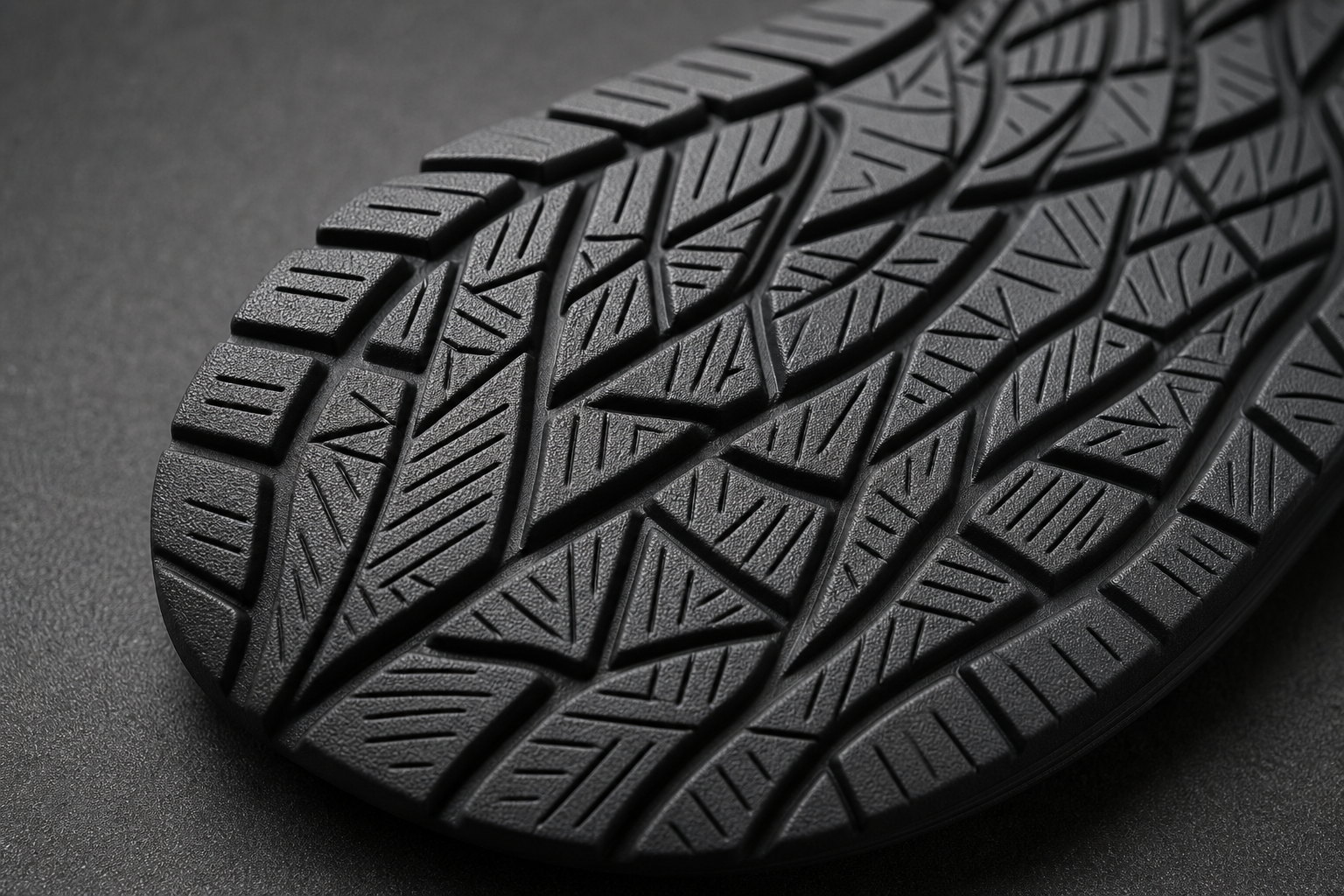
- Slip resistance on wet and oily surfaces. This is non-negotiable in healthcare and food service. Dense multi-directional sipes with narrow drainage channels move liquid out from under the contact patch; a deep mud-lug pattern is the wrong tool here.
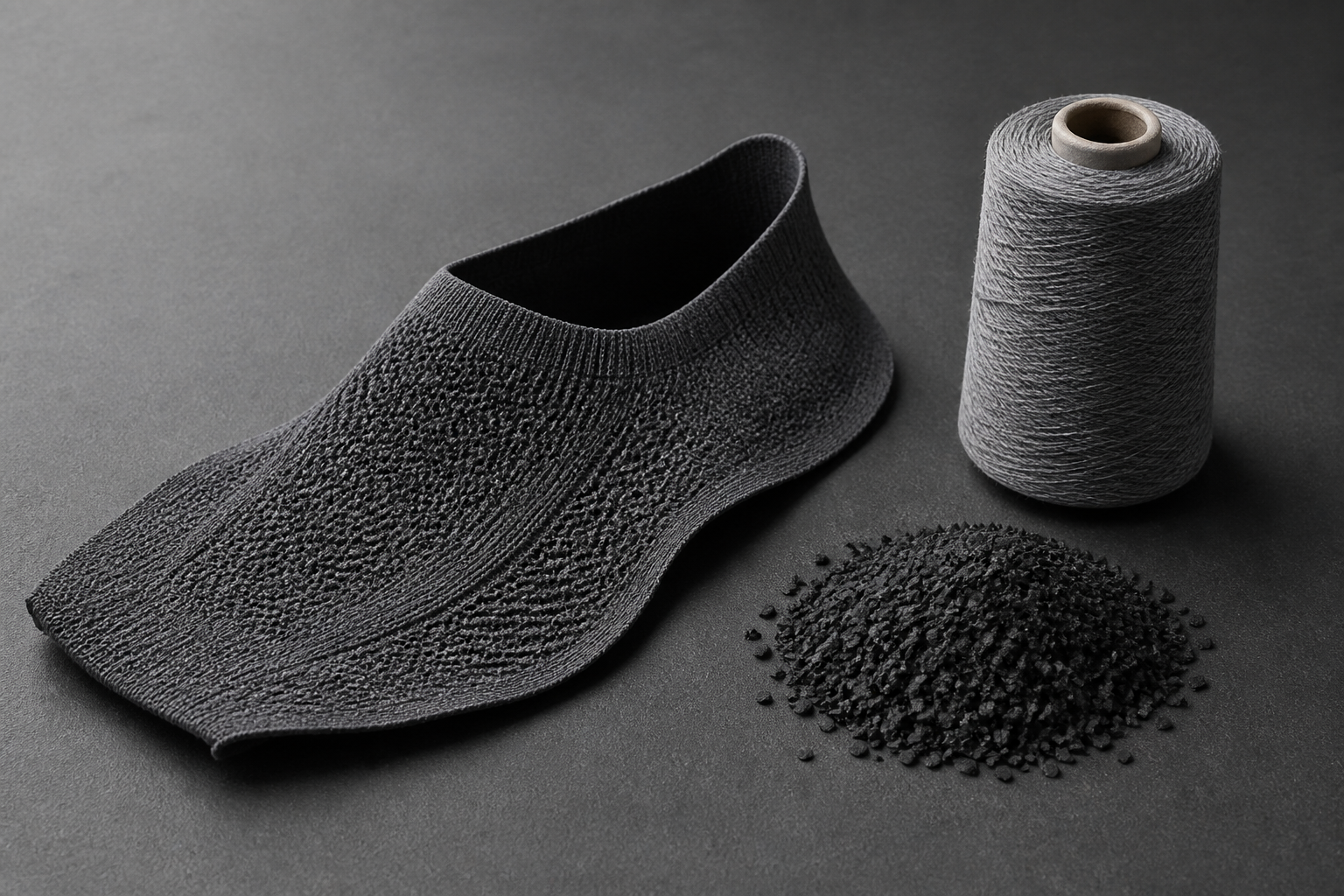
- Wipeable, stain-resistant uppers. Work environments require cleaning. Tightly woven, low-absorbency technical surfaces with minimal seams clean far more easily than open mesh or suede — and they resist the spills that end other shoes’ lives early.
- Quietness. Hospital wards, laboratories and some retail environments value footwear that does not announce itself. Sole compounds and tread geometry can be tuned to reduce squeak and slap.
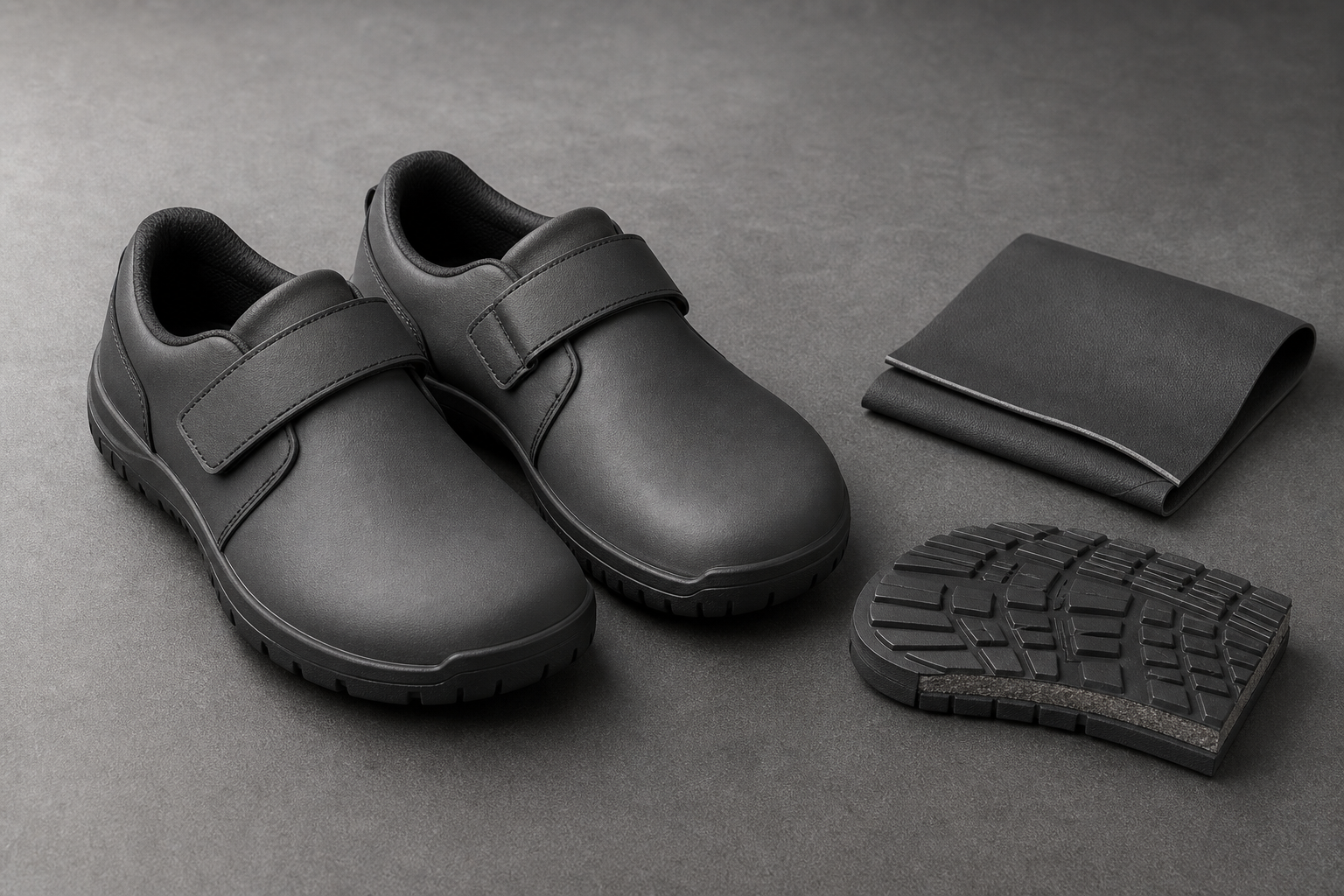
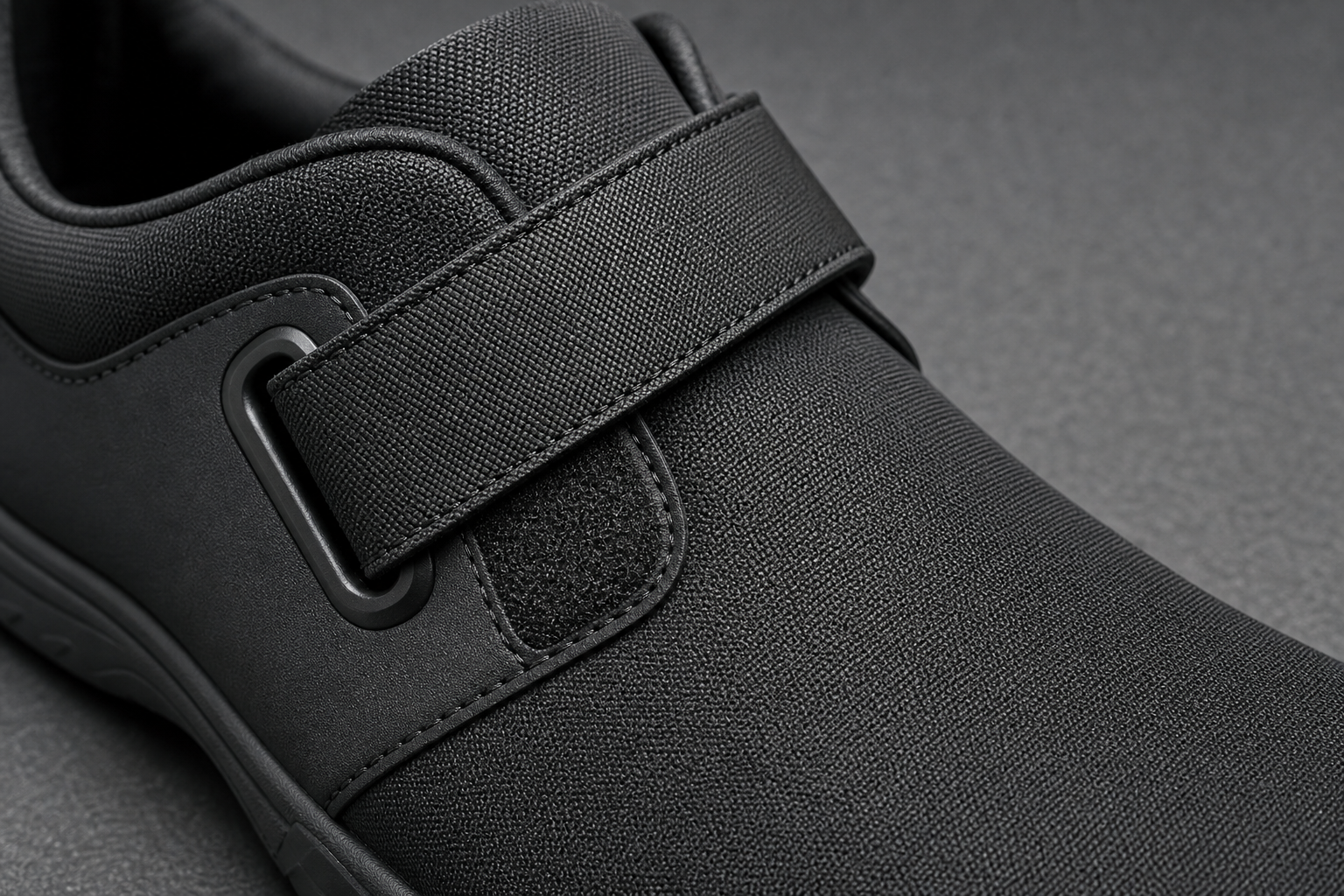
- Quick closure without laces. Staff wearing gloves, or needing to change footwear between clean and dirty zones, cannot manage laces. Wide adjustable straps or fitted elastic collars solve this — and reduce the tripping hazard of an untied lace.
- Fatigue management by design, not by thickness. Distributed support through the footbed shape and a moderately resilient compound reduces cumulative fatigue better than simply adding foam volume. The goal is a shoe that still feels appropriate at the end of a shift, not just at the start.
The Channels Nobody Is Serving
This group reaches footwear through three distinct routes, and all three are currently underserved in the barefoot space.
- Direct purchase: workers buying for themselves, often after a colleague recommends something. Word of mouth dominates this segment — the reason a credible product spreads quickly.
- Institutional and uniform procurement: employers, group purchasing organisations and uniform suppliers buying in volume. These orders are larger, repeat on a fixed schedule, and rarely see competition from lifestyle brands.
- Sector compliance requirements: employers with defined footwear standards need documented slip resistance and often documented construction. Suppliers who can provide the paperwork win the tender.
Most barefoot brands are not structurally set up to serve the second and third channels, which is exactly why the opportunity is open.
Why Brands Should Look Here
- Repeat purchases are built in: occupational footwear is a consumable. Workers replace shoes on a schedule, not on a trend cycle.
- Demand is stable and counter-cyclical: care, food service and logistics do not follow fashion seasons or consumer sentiment.
- Order sizes are larger and negotiable: institutional channels buy in volume with predictable delivery windows — easier to plan than scattered DTC spikes.
- Product feedback is unusually clear: users can articulate precisely what hurts and when, which shortens the design iteration loop.
- Referral is structural: a good work shoe is recommended on the ward, in the kitchen, on the floor. There is no better distribution channel than a colleague who stopped having foot pain.
The category has spent years talking to athletes and lifestyle customers. The people who stand the longest are still waiting for a product designed for their actual day. That gap will not stay open indefinitely.