Closing the Loop: Sustainable Materials and Zero-Waste Construction in Barefoot Footwear
Sustainability stopped being a marketing bonus in footwear and became a purchasing condition. Brand owners planning their next line are now asked for material content data by retail partners, pressed by customers who read labels, and aware that regulatory expectations are tightening rather than loosening. The brands that answer this well gain access and pricing power. The brands that answer it with adjectives alone get called out.
Here is the useful part: barefoot footwear is structurally advantaged in sustainability. Thin soles use less material. Wide, anatomical lasts waste less upper. And seamless knit construction eliminates the single largest source of production waste in footwear — the cutting room. This article maps the three levers that actually move the needle, and how to prove them with data instead of claims.
Where Footwear Waste Actually Comes From
Sustainability conversations get vague because the sources of waste are rarely separated. In practice, three dominate:
- Cutting-room offcuts: Traditional uppers are cut from flat material, and a significant share of each sheet becomes unusable trim waste. Complex panel patterns raise this further.
- Multi-material cementing: When uppers, foams, plates, and outsoles are permanently glued together, the product becomes effectively unrecyclable at end of life because the materials cannot be separated.
- Over-built components and packaging: Redundant reinforcement, unnecessary layers, and oversized packaging add material and freight weight without adding function.
A credible sustainability program names which of these it attacks, and by how much. Everything else is decoration.
Lever 1 — Materials: Verifiable Content, Not Vibes
Material choice is where most brands start, and where most greenwashing happens. The difference between a real program and a slogan is whether you can state content as a measurable share of weight, and document where it came from.
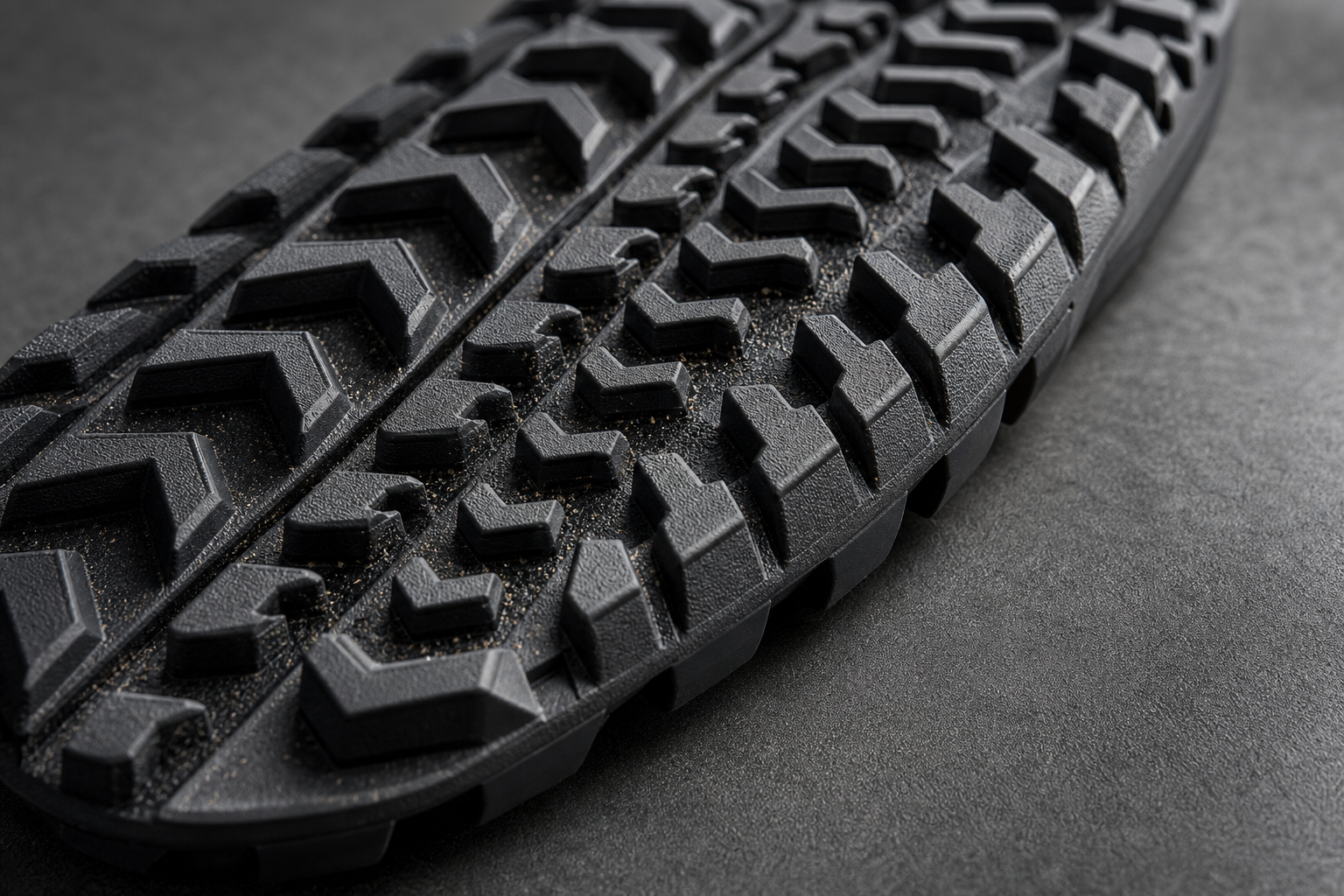
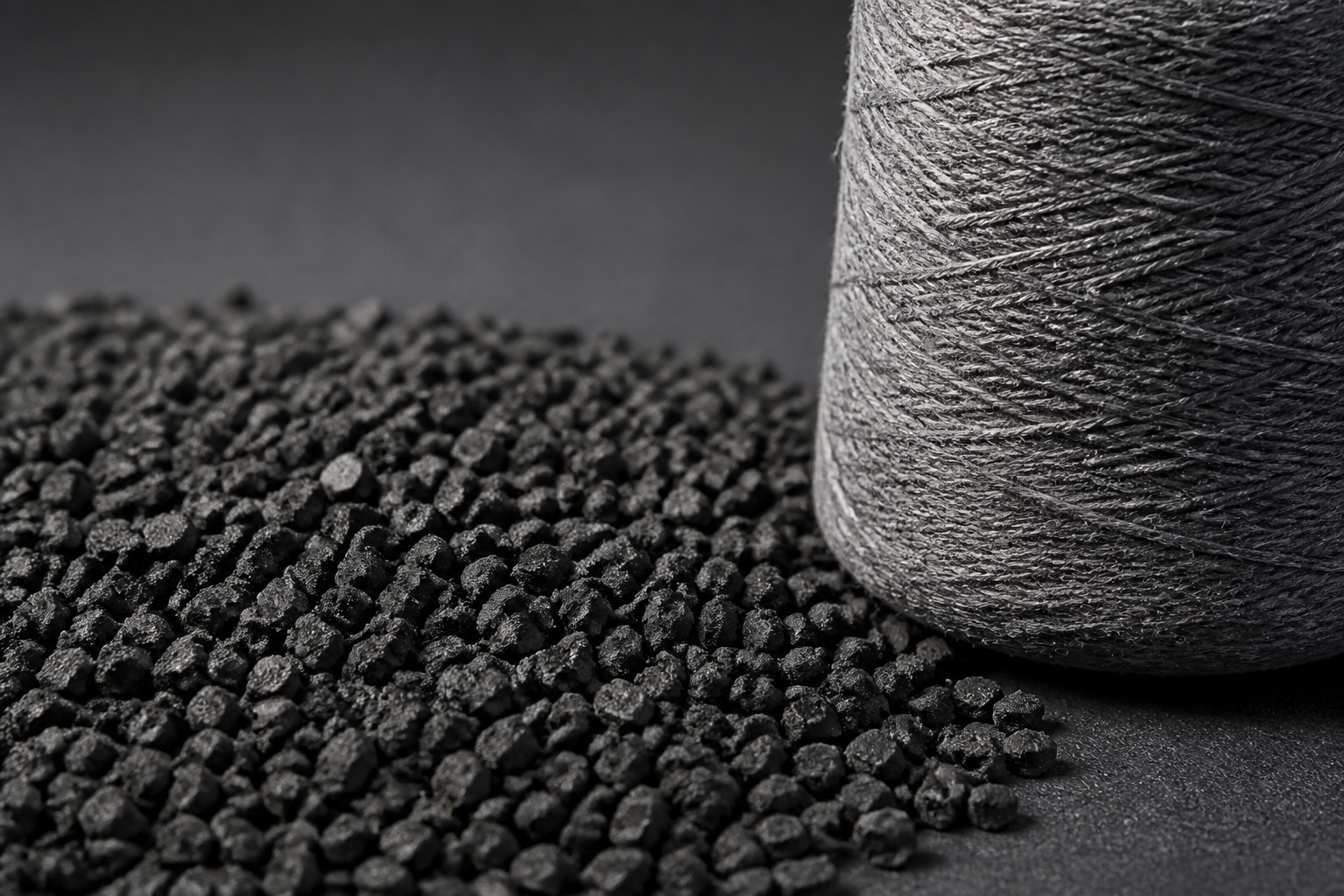
- Recycled rubber compounds for outsoles: state the recycled content by weight in the compound, and back it with batch-level documentation.
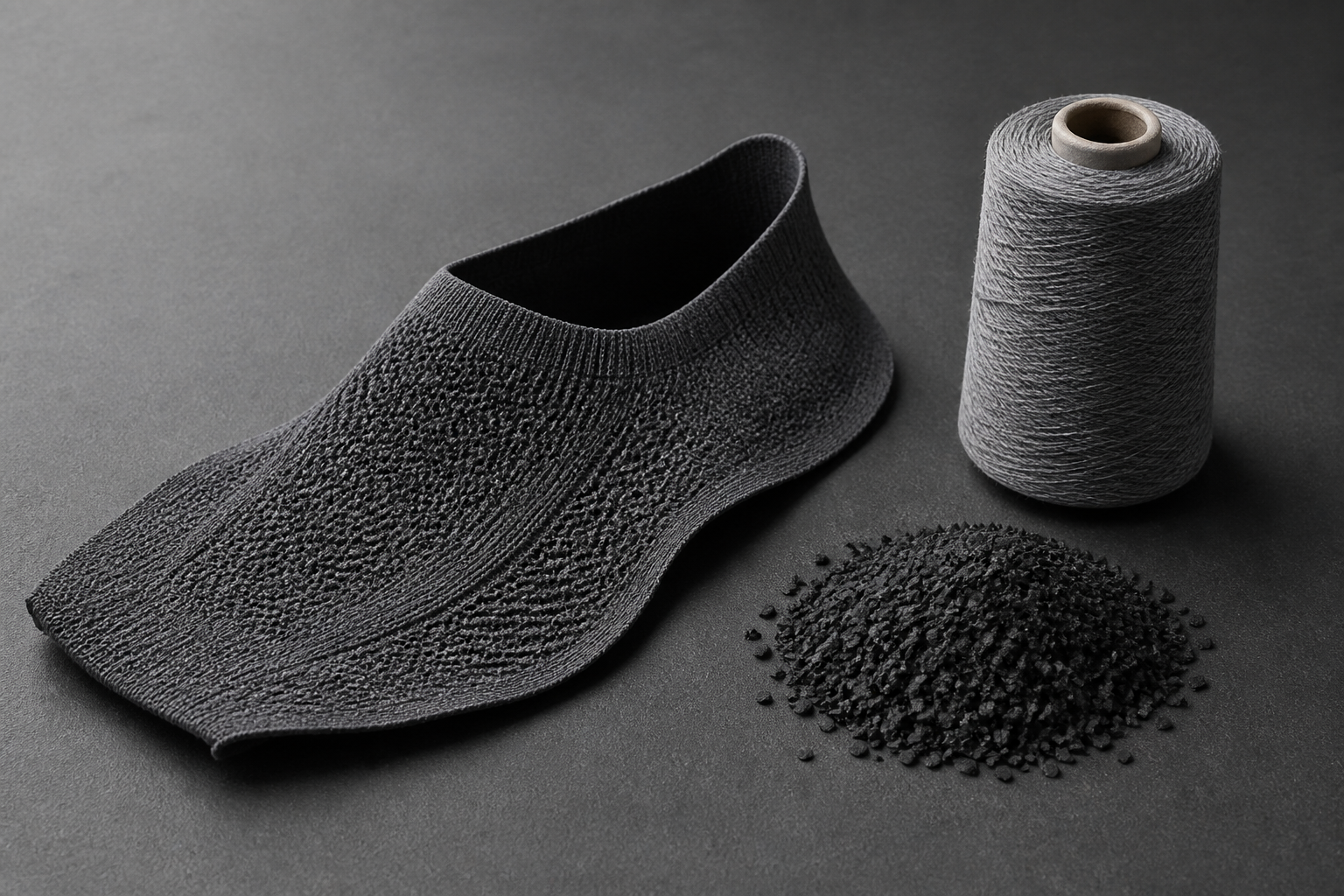
- Recycled synthetic yarns for knit uppers: recycled polyester knit can carry meaningful recycled content — but verify the yarn’s recycled share rather than assuming the fabric inherits it.
- Bio-based and lower-impact foams: plant-derived or partially bio-based midsole compounds reduce reliance on fossil feedstock. Ask for the bio-based share, not just the label.
- Natural materials where they earn their place: hemp, wool, and cork perform well in specific roles, and they biodegrade far more readily than synthetics. Match the material to the function rather than adding it for the story.
The engineering caveat: recycled and bio-based inputs change mechanical behaviour. A recycled rubber compound must still pass abrasion and wet-traction requirements. A recycled knit must still hold shape and resist stretch-out in the heel. Sustainability that fails durability is not sustainability — it just moves the waste from the factory to the returns bin, which is worse for your brand and worse for the planet.
Lever 2 — Construction: The Largest Untapped Win
If you care about waste, the biggest lever is not which material you buy — it is how much of it you throw away, and whether the finished product can eventually be taken apart.
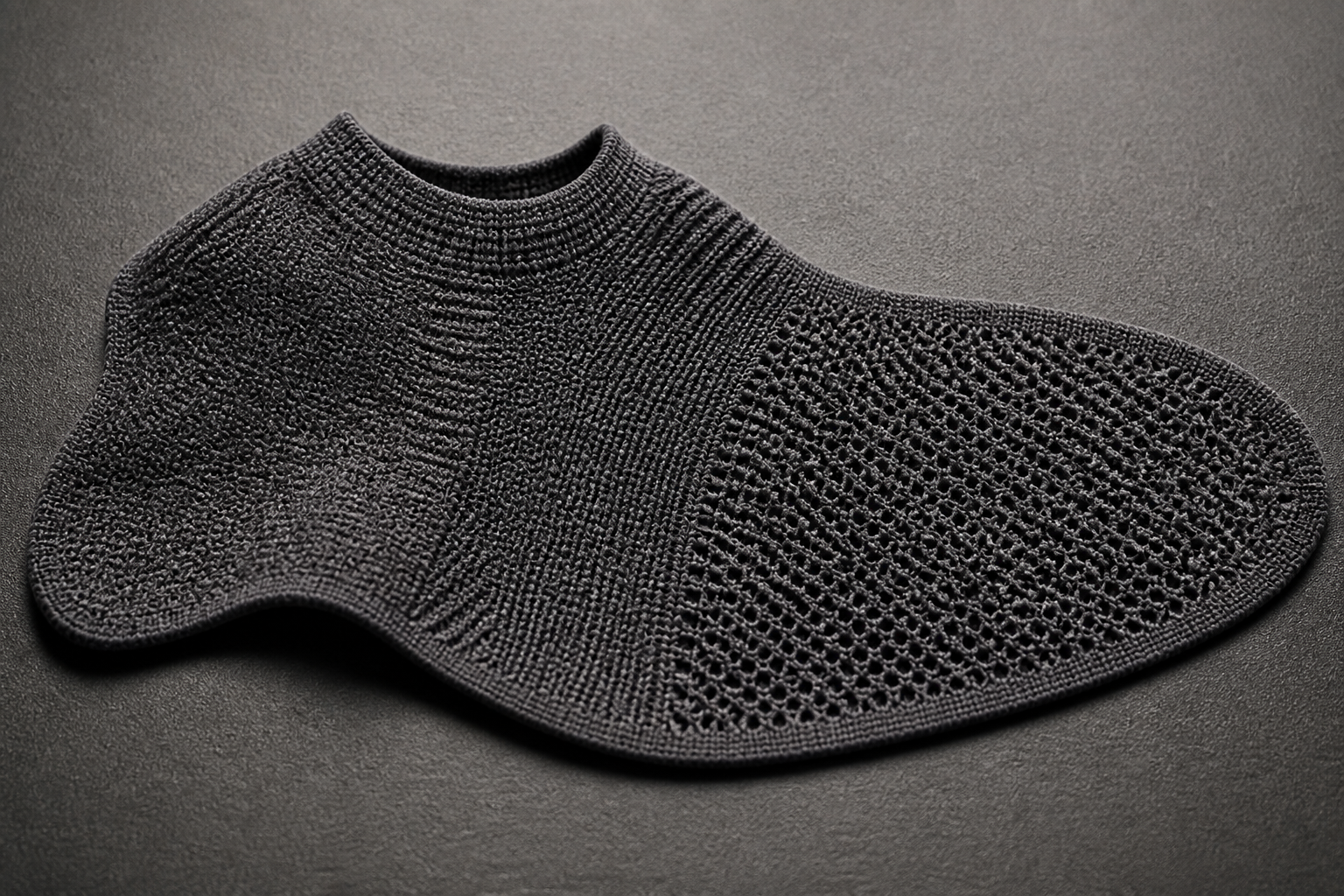
- Seamless one-piece knit uppers: A single moulded upper eliminates cutting-room offcuts for that component almost entirely, removes the seams that fail first, and reduces the number of bonded joins. For a category that prizes a smooth, blister-free interior, the sustainability gain and the performance gain point the same direction.
- Fewer components, less adhesive: Every additional bonded layer adds adhesive, adds mass, adds a separation problem at end of life. Rationalising the midsole construction reduces all three at once.
- Design for disassembly where feasible: Outsoles that can be separated from uppers, or constructions that favour a dominant material, keep end-of-life options open. This is a design decision made at the beginning, not a fix applied at the end.
This is the point most brands miss: zero-waste construction is not a sacrifice you accept for the environment. A one-piece knit upper is also lighter, smoother inside, and more consistent batch to batch. Do the engineering work once and both outcomes arrive together.
Lever 3 — Process: Adhesives, Energy, and Internal Loops
Process improvements are less visible to customers but often cheaper per unit of impact reduced.
- Water-based and low-solvent bonding systems reduce volatile emissions in the plant — and increasingly matter to buyers auditing working conditions alongside materials.
- Internal offcut recovery: trim waste that is inevitable in some components can be collected and re-entered into the supply stream rather than exported as refuse.
- Energy and water discipline in finishing: solvent-free cleaning steps, closed-loop cooling water, and efficient ovens all reduce footprint with no design trade-off.
Ask your manufacturing partner which of these are standard practice and which are optional add-ons. A partner that cannot describe its own process in specifics is not going to document yours.
Avoiding Greenwashing: What Defensible Claims Look Like
The fastest way to lose customer trust is a sustainability claim you cannot substantiate. Defensible communication has three characteristics:
- Quantified: recycled content stated as a percentage by weight for a named component, not as a vague material reference.
- Documented: third-party test reports, material declarations, and supplier certificates available on request — not just referenced in a brochure.
- Traceable: the ability to name the material batch or supplier behind a production run, so a claim can be verified after the fact.
Claims to avoid without documentation: ‘eco-friendly’, ‘green’, ‘planet-positive’, ‘100% sustainable’. These carry no verifiable meaning, and in several markets they now attract regulatory attention. Say the specific thing you did instead: ‘outsole compound contains 30% recycled rubber by weight, documentation available on request’ outperforms every adjective in the sustainability vocabulary.
The Business Case for Moving Now
Sustainability in footwear is moving from a differentiator to a baseline expectation in the channels that matter. Retail partners are asking suppliers for material data because their own customers and reporting obligations require it. Buyers who already have the answers onboard faster and negotiate from a stronger position than those scrambling to gather data after the fact.
There is also a direct commercial benefit that gets under-discussed: reduced material waste is reduced cost. A construction that eliminates cutting-room offcuts and rationalises components lowers material consumption per pair. Done properly, sustainability work and margin improvement are the same project.
Most importantly, this is a category where barefoot engineering has a genuine structural advantage over conventional footwear. Thin, minimal constructions use less material by design. The brand that documents and communicates this honestly will own the sustainable-minimalist position before it becomes crowded.