Inside the Factory: A Behind-the-Scenes Look at Professional Barefoot Shoe Manufacturing
In the world of B2B footwear sourcing, every brand claims to have a “reliable factory.” Few can actually prove it. When you’re committing your brand’s reputation to a manufacturing partner, you need more than promises—you need to see the process. This is why factory transparency has become the single most powerful trust signal in modern procurement. In this guide, we take you inside our production facility, step by step, to show exactly how a professional barefoot shoe is designed, sampled, tested, and manufactured.
Step 1: Design and Last Engineering
Every great barefoot shoe begins before a single piece of material is cut. It starts with the last—the 3D form that determines the shoe’s entire fit and feel. Our design phase uses:
- 3D Scanning Technology: Foot-scan data from thousands of real feet informs our anatomical last shapes.
- Digital Prototyping: Virtual models eliminate costly physical iterations before sampling.
- Biomechanical Validation: Every last is checked against pressure-mapping data to ensure natural weight distribution.
This is where the “barefoot DNA” of a shoe is truly born—in the precision of its last, not the thickness of its sole.
Step 2: Material Sourcing and Cutting
The materials that enter a barefoot shoe define its performance. Our sourcing standards are rigorous:
- Certified Suppliers: All rubber, textile, and foam suppliers must meet GRS/FSC or equivalent certification standards.
- Incoming QC: Every material batch is tested for thickness, density, and color accuracy before entering production.
- Precision Cutting: Automated cutting systems minimize waste and ensure every component matches the digital spec exactly.
In minimalist footwear manufacturing, precision cutting matters more than in traditional shoes—the margins for error are physically smaller.
Step 3: The Assembly Line
Barefoot shoe assembly is a masterclass in precision handwork combined with automated efficiency:
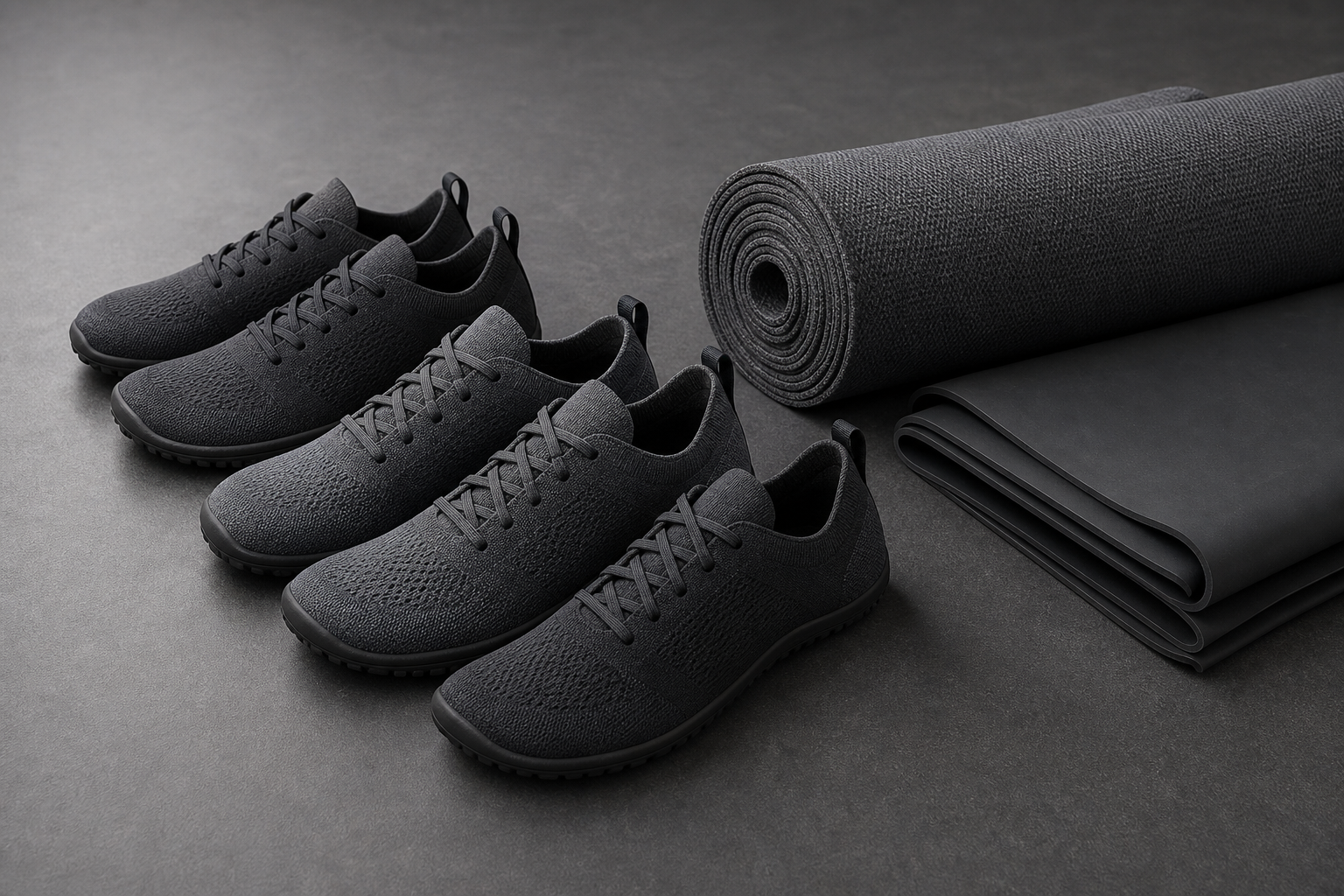
- Upper Construction: 3D-knit uppers are produced seamlessly; cut-and-sew uppers are stitched with reinforced, blister-free seams.
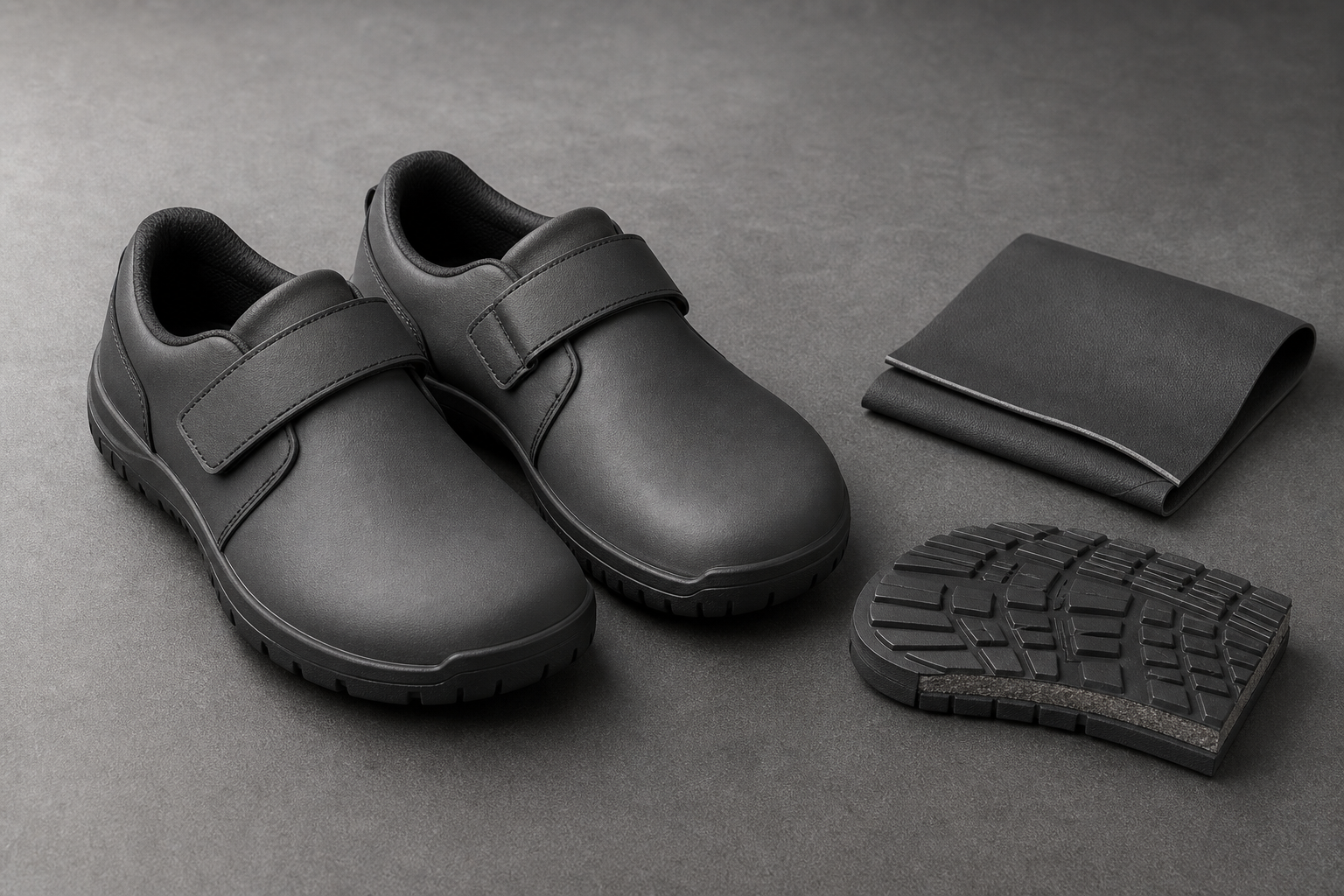
- Sole Preparation: Multi-density outsoles are molded, cured, and prepared for bonding.
- Bonding: Our cold-cement process ensures flexible, durable adhesion without the rigidity of traditional hot-melt methods.
- Lasting: The upper is stretched over the anatomical last, locked into the exact shape your design specified.
Step 4: Quality Control — The 7-Point Inspection
Every pair of shoes leaves our factory only after passing a seven-point inspection protocol:
- Visual Check: Color, stitching, and material defects—both sides, inside and out.
- Sole Alignment: Outsole-to-upper alignment within 1mm tolerance.
- Flex Test: Manual and machine flexing to verify sole integrity.
- Adhesion Test: Pull tests on bonded components.
- Size Verification: Every pair is measured against calibrated lasts—no size drift.
- Symmetry Check: Left-right mirror accuracy for anatomical correctness.
- Final Cosmetic Review: Packaging-grade appearance before box sealing.
Step 5: Packaging and Global Logistics
The final step is getting your product to market intact:
- Custom Packaging: Your branding, your inserts, your unboxing experience.
- Serial Tracking: Every carton is logged with style, size, and color data.
- Global Shipping: Consolidated logistics from our facility to warehouses worldwide, with transparent freight tracking.
Conclusion: See Your Partner Before You Sign
The best way to evaluate a manufacturing partner is to see their process with your own eyes—and the second best is reading an honest, detailed account of it. When a factory is willing to show you every step of its operation, from last engineering to final inspection, it signals a confidence that no brochure can fake. In 2026, transparency isn’t just nice-to-have; it’s the foundation of every durable B2B partnership.